Institutional knowledge in Nigerian organizations is often carried by a few experienced employees who “just know how things work.
Let me ask you something: how much of your business success depends on that one person who just “knows how things work”?
You know who I’m talking about. The technician who can tell when a machine is about to break down just by listening to it. The dispatch rider who knows exactly which routes to avoid during Lagos traffic. The supervisor who somehow keeps production running smoothly even during power outages.
These people are invaluable. And if you’re being honest, your operations would probably struggle without them.
Here’s the uncomfortable truth: that’s a significant business risk.
TL;DR
Your most valuable business knowledge lives in your experienced employees’ heads. When they leave, that knowledge disappears causing downtime, errors, and operational disruption. Immersive learning technology can capture this expertise and scale it across your workforce, protecting your operations from knowledge drain and dramatically reducing training time.
Why Institutional Knowledge in Nigerian Organizations Is a Hidden Risk
In Nigerian organizations particularly in manufacturing, logistics, construction, energy, and large service operations some of the most valuable knowledge never makes it into any document, manual, or training program. It exists entirely in people’s heads.
We call this institutional knowledge. It’s the unwritten playbook. The tricks of the trade. The workarounds that actually work. The shortcuts that save hours. The fixes that aren’t in any manual.
And when the people carrying this knowledge leave, whether they retire, resign, or even just go on annual leave, teams are left scrambling. Productivity drops. Mistakes multiply. Operations that used to run smoothly start breaking down.
Sound familiar?
The Real Cost of Undocumented Expertise
Let me share some scenarios you might recognize.
The Training Bottleneck: A new technician joins your factory in Ogun State. The production line uses customized equipment, but only one senior technician really knows how to troubleshoot it. So the new hire shadows this person for weeks, slowing everyone down. Meanwhile, your experienced technician who should be focused on higher-value work is stuck repeating the same training that should have been systematized years ago.
The Escalation Spiral: Your customer support team receives a call about an unusual issue. It’s not documented anywhere. Only one long-serving staff member knows the fix, but they’re unavailable. The customer waits. The issue escalates. Trust erodes. Costs accumulate.
The Single Point of Failure: Your logistics company has a dispatcher who knows Lagos intimately every shortcut, every traffic pattern, every optimal delivery window. When they’re unavailable, deliveries get delayed, fuel costs spike, and customer satisfaction drops.
These aren’t hypothetical situations. They’re happening right now in organizations across Nigeria.
Why This Challenge Is Intensifying
Here’s what makes this especially urgent: your most experienced workers are aging out of the workforce. Some are retiring. Others are leaving for better opportunities. And today’s workforce mobility means people don’t stay in roles for decades like previous generations.
For many leaders, the real danger of institutional knowledge in Nigerian organizations only becomes visible after a key employee leaves.
Meanwhile, younger employees are joining without the benefit of that accumulated wisdom. They’re eager to learn, but there’s no structured system to transfer what the veterans know. Everyone starts from scratch, learning through costly trial and error, repeating mistakes that were solved years ago.
Without structured knowledge capture, organizations experience:
- Extended onboarding timelines
- Outdated standard operating procedures
- Increased errors and expensive rework
- Declining productivity and service quality
What appears to be business as usual is actually a fragile system dependent on a handful of individuals who could leave tomorrow.
Understanding Tacit Knowledge: The 90% You Can’t See
Most organizational knowledge is tacit, expertise based on experience, intuition, and years of hands-on work that can’t easily be written down. Some estimates suggest this could be as high as 90%.
Consider these examples: How do you document the ability to diagnose a machine fault by sound? How do you create a manual for knowing when equipment is about to fail? How do you capture the judgment a supervisor exercises during a power outage to maintain productivity?
This tacit knowledge is extraordinarily valuable. It’s what differentiates high-performing teams from average ones. It’s difficult for competitors to replicate. But it’s also incredibly vulnerable.
When that knowledge walks out the door, you experience knowledge drain and the impact shows up immediately in downtime, inefficiencies, and competitive disadvantage.
The Modern Solution: Immersive Learning That Captures Real Expertise
The encouraging news is that technology has evolved to address this challenge and it’s more accessible than you might think.
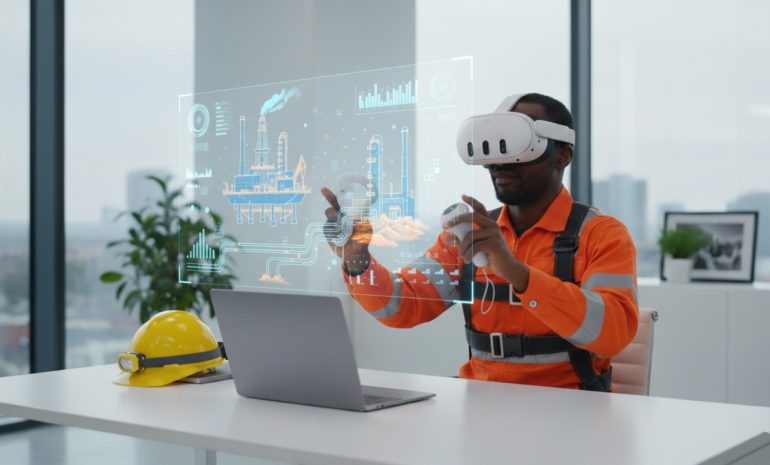
Immersive learning systems can now accomplish what was nearly impossible before: capturing the expertise residing in your top performers and transforming it into experiences that new employees can practice and master on their own.
Here’s how it works:
Immersive simulations and virtual environments recreate real workplace scenarios where experienced employees demonstrate their expertise. New hires can then practice these same scenarios repeatedly troubleshooting equipment failures, handling complex customer situations, navigating operational challenges all in a safe, controlled environment.
Instead of waiting weeks for the one person who knows how to fix a problem, your team can:
- Learn from virtual recreations of expert problem-solving
- Practice realistic scenarios until they build confidence and competence
- Access step-by-step guidance based on how your best people actually work
- Make mistakes and learn without costly downtime or safety risks
This eliminates dependency on prolonged job shadowing, outdated manuals, and the hope that knowledge somehow transfers through observation alone.
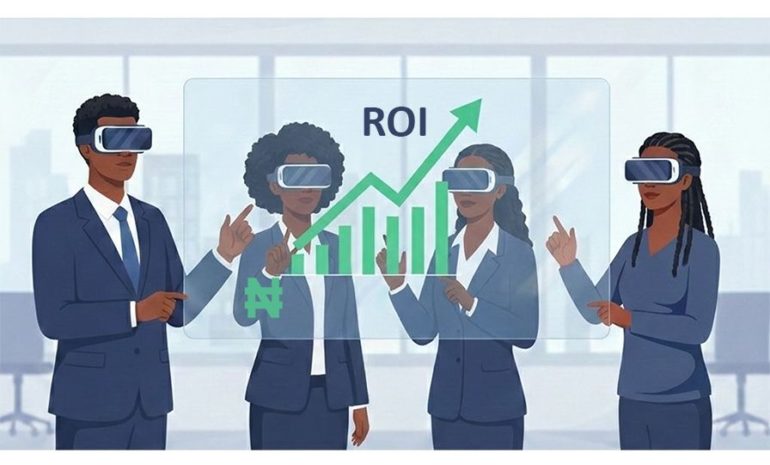
For Nigerian businesses operating in complex, high-risk, or high-volume environments oil and gas operations, manufacturing plants, logistics and supply chain, construction sites, utilities and power generation, healthcare facilities immersive learning delivers measurable results: dramatically reduced training time (from months to weeks), improved consistency and safety standards, enhanced confidence across teams, and a resilient workforce that performs even when key individuals are unavailable.
Making Knowledge Capture a Strategic Priority
Organizations that thrive over the next decade won’t simply be those with the best talent. They’ll be the ones that successfully capture, preserve, and scale what their people know.
By investing in knowledge capture systems, you can:
- Future-proof operations against workforce transitions
- Accelerate onboarding from months to weeks
- Reduce operational risk and eliminate single points of failure
- Preserve competitive advantages built over years
- Improve consistency across teams and locations
Your competitive advantage isn’t just who you hire, it’s what you help them learn and what you retain when they eventually move on.
Take Action Now
Relying on undocumented knowledge might work today, but it’s not sustainable. Eventually, experienced employees will transition out. When they do, the cost becomes painfully visible in downtime, errors, missed deadlines, frustrated customers, and lost revenue.
The question isn’t whether to invest in knowledge capture. It’s whether you can afford not to.
Ready to protect your organization’s institutional knowledge? Contact Insightful3D to explore how Immersive learning solutions can help you capture and scale your team’s expertise. Our specialists work with Nigerian organizations to build resilient, future-ready workforces.
Schedule a Consultation | View Case Studies
What’s your biggest challenge with knowledge transfer in your organization? Share your thoughts in the comments below.