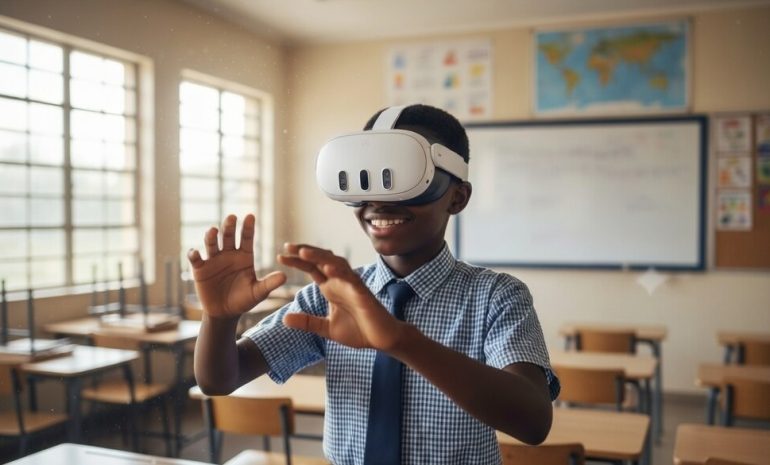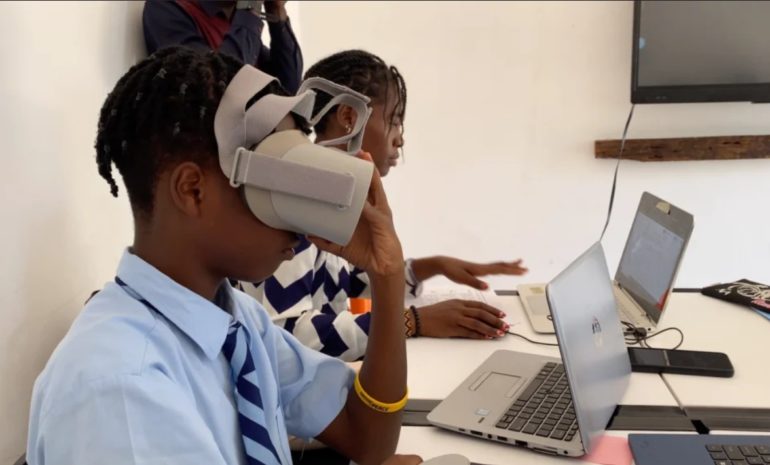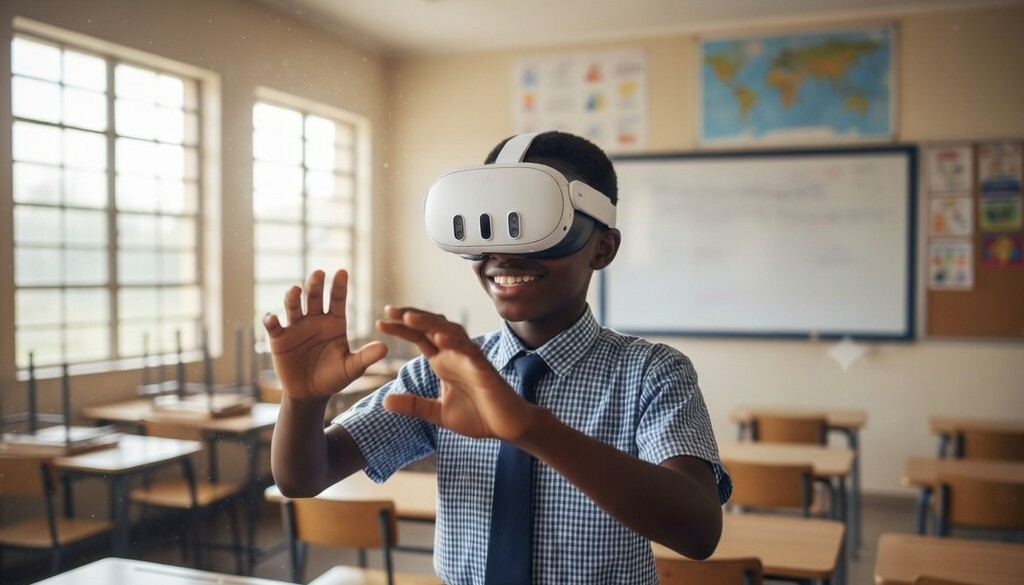
Virtual reality in education is gradually shifting from an emerging concept to a practical tool with real implications for how students learn. In Nigeria, where access, infrastructure, and engagement remain persistent challenges, VR presents an opportunity to rethink not just what students learn, but how they experience learning.
At its core, VR enables immersive learning by placing students inside environments where they can interact with content rather than passively consume it. This shift is particularly relevant in a system where traditional teaching methods often rely heavily on theory, memorization, and limited practical exposure. Virtual reality in education Nigeria is transforming how students learn, offering immersive classrooms, virtual field trips, and interactive STEM labs
Moving Beyond the Traditional Classroom
A typical classroom in many Nigerian schools, especially in public institutions, is often constrained by large class sizes, limited teaching aids, and minimal opportunities for hands-on learning. While dedicated teachers continue to do their best within these constraints, the gap between theoretical knowledge and practical understanding remains significant.
Virtual reality introduces a different model. Instead of describing concepts, teachers can demonstrate them in immersive environments. Students are no longer just listening. They are exploring, interacting, and participating.
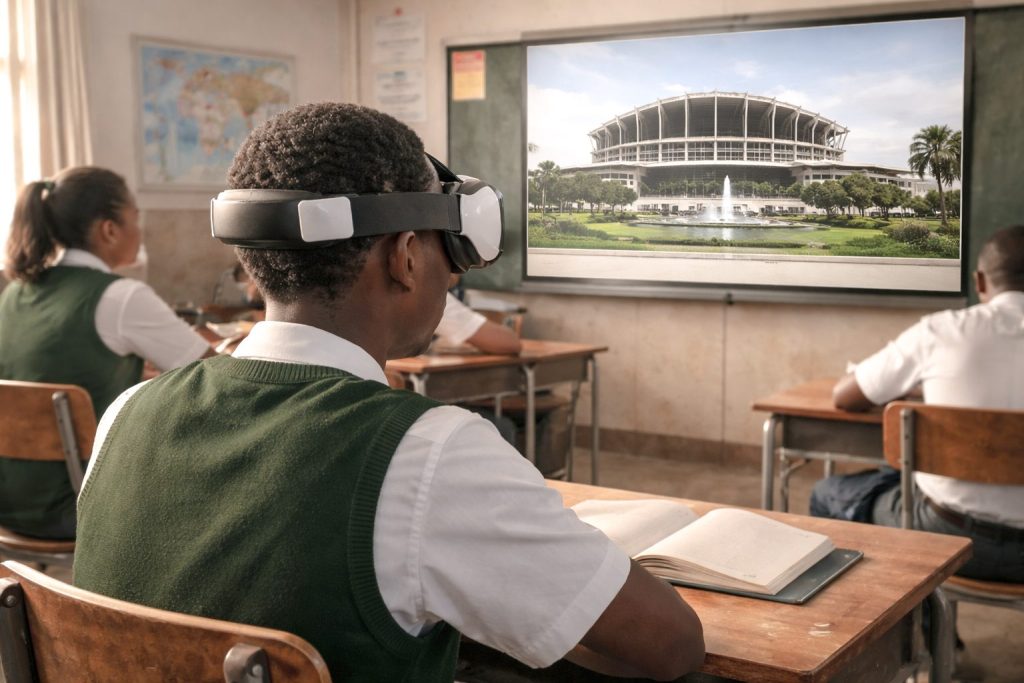
Imagine a civic education class where students do not just read about governance structures but step into a virtual National Assembly, observing how decisions are debated and made. Consider a history lesson where learners experience key moments in Nigeria’s independence movement within a reconstructed 3D environment or a virtual excursion to the National Theatre, where students walk through decades of Nigerian art, performance, and cultural heritage rather than simply reading about it. These are not abstract possibilities. They represent the practical direction of immersive learning.
Reimagining Field Trips Without the Constraints
Field trips have always been an important part of education, offering students exposure beyond the classroom. However, in Nigeria, they are often limited by cost, logistics, and safety considerations. Many schools simply cannot afford to organize them regularly.
Virtual reality removes these limitations.
With VR, students can explore ecosystems, historical landmarks, and industrial environments without leaving their school premises. A class studying environmental science can take a virtual tour of a conservation site and observe biodiversity in context. Similarly, students can explore industrial operations such as energy production or manufacturing without the risks and restrictions associated with physical visits.
What makes this particularly valuable is not just accessibility, but repeatability. Unlike traditional excursions, virtual experiences can be revisited. This allows students to reinforce learning at their own pace.
Strengthening STEM Education Through Simulation
One of the most significant gaps in the Nigerian education system lies in STEM education, particularly in the area of practical learning. Many schools lack fully equipped laboratories, and even where facilities exist, access can be limited.
Virtual labs provide a compelling alternative.
Through VR, students can conduct experiments in physics, chemistry, and biology within a controlled digital environment. They can manipulate variables, observe outcomes, and repeat procedures without the constraints of physical resources or safety risks. This is especially important in subjects like chemistry, where real-world experimentation may involve hazardous materials.
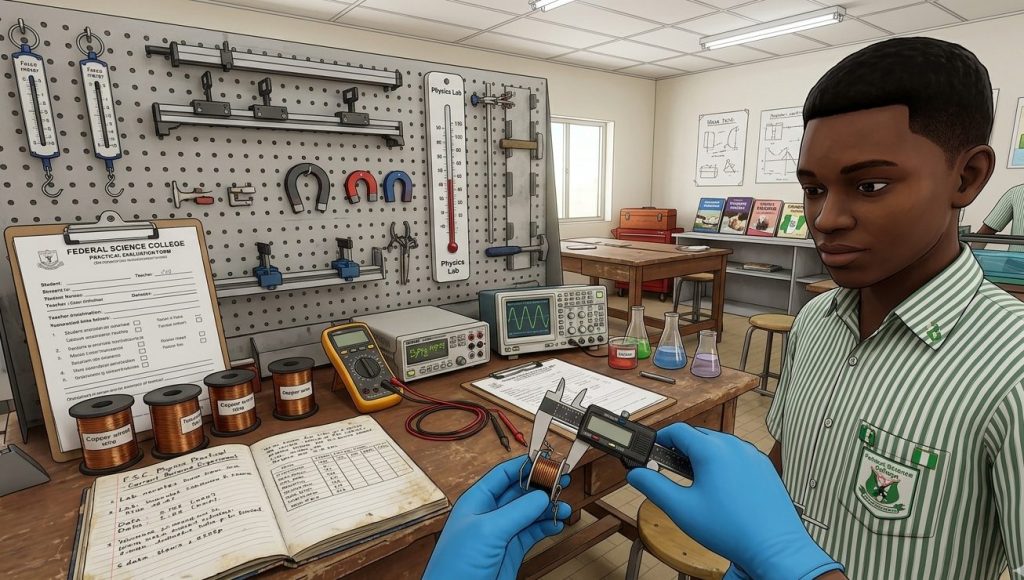
Beyond safety and accessibility, VR helps students visualize abstract concepts. It turns formulas and diagrams into interactive experiences. This kind of engagement improves understanding and supports long-term retention.
Expanding Access and Reducing Inequality
Education inequality remains a critical issue in Nigeria, with significant disparities between urban and rural schools, as well as between private and public institutions. Access to quality teaching, facilities, and learning resources is not evenly distributed.
VR has the potential to bridge some of these gaps.
Once the necessary infrastructure is in place, the same immersive learning content can be delivered across multiple locations. A student in a rural community can access the same high-quality simulations as a student in a well-funded urban school. In this sense, VR is not just a teaching tool. It is a scaling mechanism for educational quality.
Challenges such as electricity, device costs, and technical support remain important considerations. However, with the growing availability of more affordable hardware and alternative power solutions, these barriers are gradually becoming more manageable.
Supporting Teachers, Not Replacing Them
A common concern around new technologies in education is whether they will replace teachers. In reality, VR works best as a complement to teaching, not a substitute.
Teachers remain central to the learning process. They guide discussions, provide context, and help students interpret what they experience in virtual environments. VR enhances their ability to explain complex ideas and engage students more effectively.
It also opens up new possibilities for teacher training. Educators can practice classroom scenarios, experiment with different teaching approaches, and develop confidence in using interactive tools within simulated environments.
A Practical Path Forward
While the potential of VR in Nigerian education is clear, adoption will likely be gradual rather than immediate. Schools may begin with small-scale implementations such as shared VR labs or pilot programs, then expand based on outcomes and feedback.
Partnerships will play a key role. Collaboration between schools, technology providers, and government bodies can help address cost and infrastructure challenges while ensuring that content aligns with national curricula.
Ultimately, the goal is not to replace existing systems, but to enhance them in a meaningful and sustainable way.
Conclusion
Virtual reality offers a compelling vision for the future of education in Nigeria. It supports a model where learning is more interactive, more accessible, and more closely aligned with real-world experiences.
While challenges remain, the direction is clear. As schools continue to explore innovative approaches to teaching and learning, VR stands out as a tool with the potential to make education not just more engaging, but more effective.
The focus now is on how thoughtfully and effectively it can be integrated into the Nigerian education system.
Contact us today to discover how virtual reality in education Nigeria can transform learning in your school