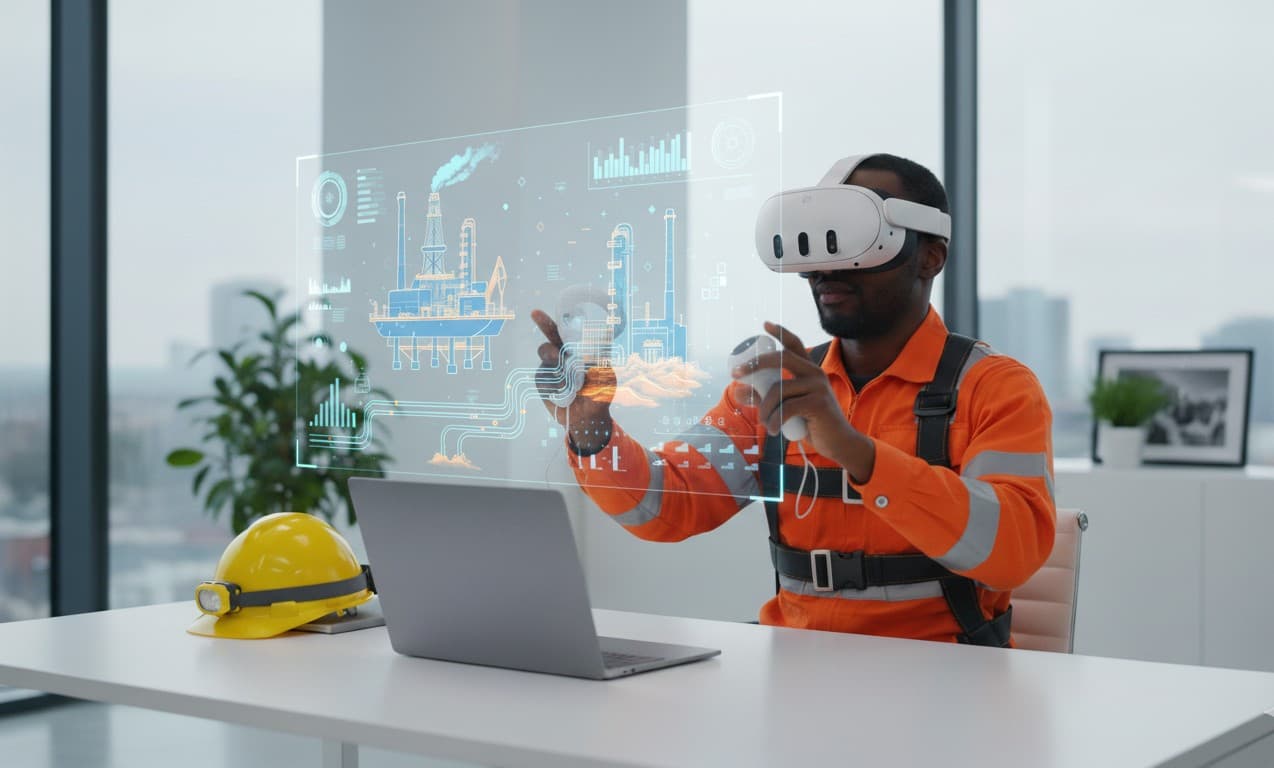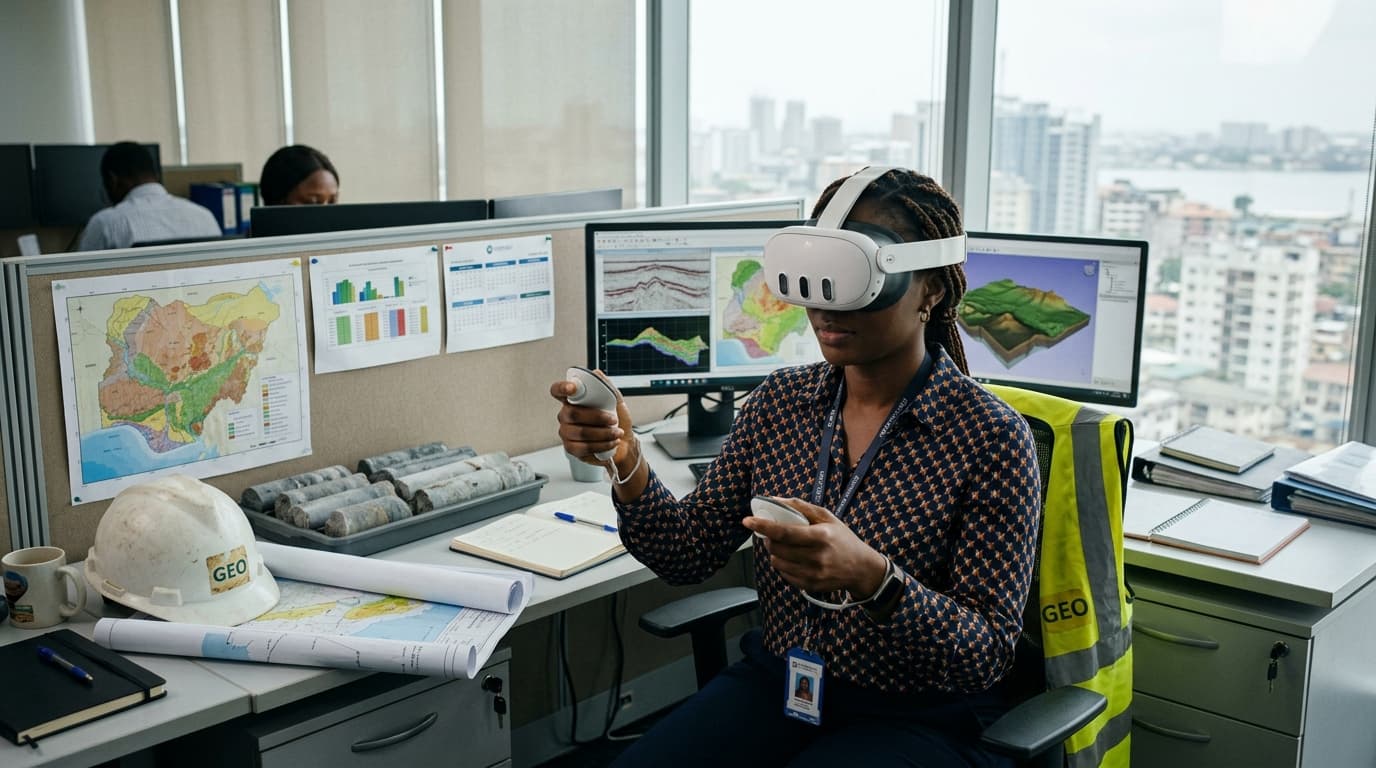
Nigeria's oil and gas industry operates in one of the most technically demanding environments in the country. From offshore production facilities and gas processing plants to refineries and terminals, maintaining safe and efficient operations requires a highly skilled workforce.
Yet preparing personnel for complex industrial environments remains a challenge. Some operational procedures are difficult to demonstrate, certain emergencies cannot safely be recreated, and access to live equipment for training is often limited.
Virtual Reality (VR) is helping to bridge this gap by allowing workers to learn, explore and practise within realistic digital environments.
As immersive technologies become increasingly accessible, Nigerian oil and gas companies have an opportunity to modernise workforce training, strengthen safety preparedness and improve how technical knowledge is transferred across their operations.
Why Virtual Reality Matters for Oil and Gas Operations
Traditional industrial training relies heavily on classroom instruction, manuals, technical demonstrations and supervised field experience. These methods remain essential, but they cannot always reproduce the complexity of actual operating conditions.
VR introduces an experiential dimension to learning. Using immersive headsets, personnel can enter simulated industrial environments, interact with equipment, identify hazards and rehearse procedures without exposure to the corresponding physical risks.
A technician, for example, could become familiar with the layout of a gas processing facility before visiting the site. An operator could practise identifying equipment during an emergency scenario, while maintenance personnel could explore the internal components of machinery through interactive 3D models.
The value lies in making training more practical, repeatable and accessible.
A 2020 PwC study on VR training found that participants completed certain soft-skills training programmes up to four times faster than classroom learners. While these findings do not directly establish equivalent results for industrial operations, they highlight the potential of immersive learning when applied appropriately.
Key Applications of Virtual Reality in Nigeria's Oil and Gas Industry
VR has applications across the upstream, midstream and downstream sectors, particularly in areas involving complex equipment, operational risks and specialised workforce development.
1. Industrial Safety and Emergency Response Training
Health, Safety and Environment (HSE) training is one of the most promising applications of VR in the energy sector.
Workers can participate in simulations involving confined spaces, gas leaks, fire emergencies, hazardous work environments and evacuation procedures. These experiences allow trainees to recognise warning signs, make decisions and review their responses in controlled settings.
Unlike conventional instructional videos, interactive simulations can require personnel to respond to events rather than simply observe them.
Through its HSE and emergency preparedness solutions, Insightful3d develops immersive experiences that help organisations translate operational safety requirements into realistic, interactive learning scenarios.
These programmes are intended to complement approved safety procedures, practical exercises and competency assessments.
2. Workforce Training and Equipment Familiarisation
Oil and gas facilities contain sophisticated equipment and interconnected processing systems. Understanding how these systems function is essential for operators, technicians, engineers and maintenance personnel.
Immersive training can help employees explore industrial environments, understand equipment configurations and become familiar with operational sequences before interacting with physical assets.
For organisations managing multiple facilities, VR also creates opportunities to deliver consistent training experiences across locations.
Instead of relying exclusively on physical demonstrations, companies can develop reusable training modules that support onboarding, refresher programmes and technical competency development.
This is particularly relevant to oil and gas workforce training, where practical understanding, procedural familiarity and continuous learning are central to operational performance.
3. Digital Procedures and Maintenance Training
Maintenance activities frequently involve complex instructions, detailed equipment knowledge and carefully sequenced tasks.
VR and interactive 3D visualisation can make these procedures easier to understand by presenting technical information within the context of the equipment itself.
For example, a technician preparing to inspect a compressor could explore its components virtually, identify relevant inspection points and review an approved maintenance sequence before supervised fieldwork.
Organisations can also transform conventional operating manuals into interactive digital procedures, combining technical instructions with 3D models, visual references and guided interactions.
This approach can improve access to technical information while supporting more consistent procedural understanding.
4. Virtual Facility Tours and Digital Twins
Not every immersive application requires a fully interactive training simulation.
Using 360-degree imagery, panoramic video and 3D visualisation, oil and gas companies can create virtual representations of their facilities for orientation, technical familiarisation and remote collaboration.
New employees and contractors can explore selected plant areas before mobilisation, while engineering teams can use virtual environments to communicate equipment layouts and facility configurations.
More advanced applications involve digital twins: digital representations of physical assets or facilities that may incorporate engineering and operational information.
When appropriately integrated, these technologies can support maintenance planning, asset understanding and collaborative reviews.
Together, they form part of the broader range of XR and 3D solutions for oil and gas operations.
The Business Benefits of VR Training
Beyond its technological appeal, VR offers practical opportunities for organisations seeking to strengthen workforce performance.
Improved learning experiences: Interactive environments help learners visualise complex systems and participate actively in training rather than relying exclusively on theoretical explanations.
Safer procedural rehearsal: Workers can encounter simulated hazards and practise selected responses without exposing themselves or operational facilities to the physical risks being represented.
Consistent training delivery: Approved VR modules can be reused across departments, training cohorts and operating locations, supporting standardised learning objectives.
Reduced training logistics: Some introductory training and facility familiarisation activities can take place without travelling to remote sites or requiring access to live equipment.
Better training assessment: Interactive simulations can capture selected decisions, errors and task outcomes, providing instructors with additional information for evaluating learning progress.
These benefits are not automatic. Their value depends on the relevance of the training content, implementation quality and how effectively immersive learning is integrated into existing programmes.
Making VR Adoption Practical for Nigerian Operators
Implementing VR successfully requires more than purchasing headsets.
Nigeria's industrial environment presents particular considerations, including connectivity constraints, equipment support requirements, training budgets and the need for technically accurate content.
A generic simulation may be suitable for introductory safety awareness, but specialised equipment training often requires accurate digital representations of actual assets and procedures.
This makes collaboration between VR developers, engineering teams, HSE specialists and training managers particularly important.
Deployment infrastructure must also reflect operating realities. Some training applications can run on standalone VR devices without continuous internet access, while more advanced collaborative systems may require additional computing and network resources.
Importantly, VR should complement existing training methods rather than replace supervised practical experience.
Insightful3d's industrial training solutions are developed around this principle: immersive technology should serve clearly defined learning and operational objectives, rather than become an isolated technology initiative.
A Practical Roadmap for VR Adoption
For oil and gas companies exploring immersive technology, a phased approach offers a practical starting point.
Phase 1 — Identify high-value applications. Assess existing training gaps and select procedures where immersive learning could provide meaningful value, particularly those involving complex equipment, hazardous scenarios or difficult-to-access environments.
Phase 2 — Develop and validate a pilot. Create a focused VR experience and involve relevant subject matter experts in reviewing its accuracy, usability and instructional effectiveness.
Phase 3 — Measure results and expand. Evaluate learning outcomes, procedural understanding, trainee feedback and implementation costs before extending the programme to additional use cases.
Phase 4 — Integrate with wider systems. As adoption matures, organisations can explore integration with learning management systems, digital twins and other industrial technology platforms.
This measured approach allows companies to establish value before committing to wider deployment.
The Future of Immersive Technology in Nigeria's Energy Sector
The long-term potential of Virtual Reality extends beyond individual training modules.
As XR technologies mature, immersive environments may increasingly support engineering collaboration, remote facility familiarisation, maintenance planning and industrial knowledge management.
The combination of VR, interactive 3D models, digital twins and operational information could also make complex industrial data more accessible to technical and management teams.
For Nigerian oil and gas operators, the most important consideration is not how quickly emerging technologies can be adopted, but how effectively they can address genuine operational needs.
Organisations that prioritise relevant use cases, accurate content and measurable outcomes will be better positioned to realise sustainable value from immersive technology.
Conclusion
Virtual Reality presents an important opportunity for Nigeria's oil and gas industry to improve how personnel learn, prepare and interact with complex industrial environments.
From HSE training and equipment familiarisation to digital maintenance procedures and virtual facility tours, immersive technologies can complement established operational practices while introducing new possibilities for workforce development.
The most successful applications will be those built around real operational requirements, supported by technical expertise and evaluated against meaningful performance objectives.
For Nigerian operators, the path forward begins with identifying where immersive technology can make a practical difference.
Download the White Paper: Virtual Reality in Nigerian Oil & Gas Industry
Insightful3d Studio has published a detailed white paper examining the opportunities, implementation considerations and future of VR within Nigeria's energy sector.
Titled Virtual Reality in Nigerian Oil & Gas Industry: An Introductory Overview of Industry Trends and Adoption Roadmap, the February 2026 publication provides further insights into industrial VR applications, global research, Nigerian implementation challenges and a structured four-phase adoption roadmap.
The publication is designed for oil and gas executives, HSE professionals, training managers, engineers and digital transformation teams.