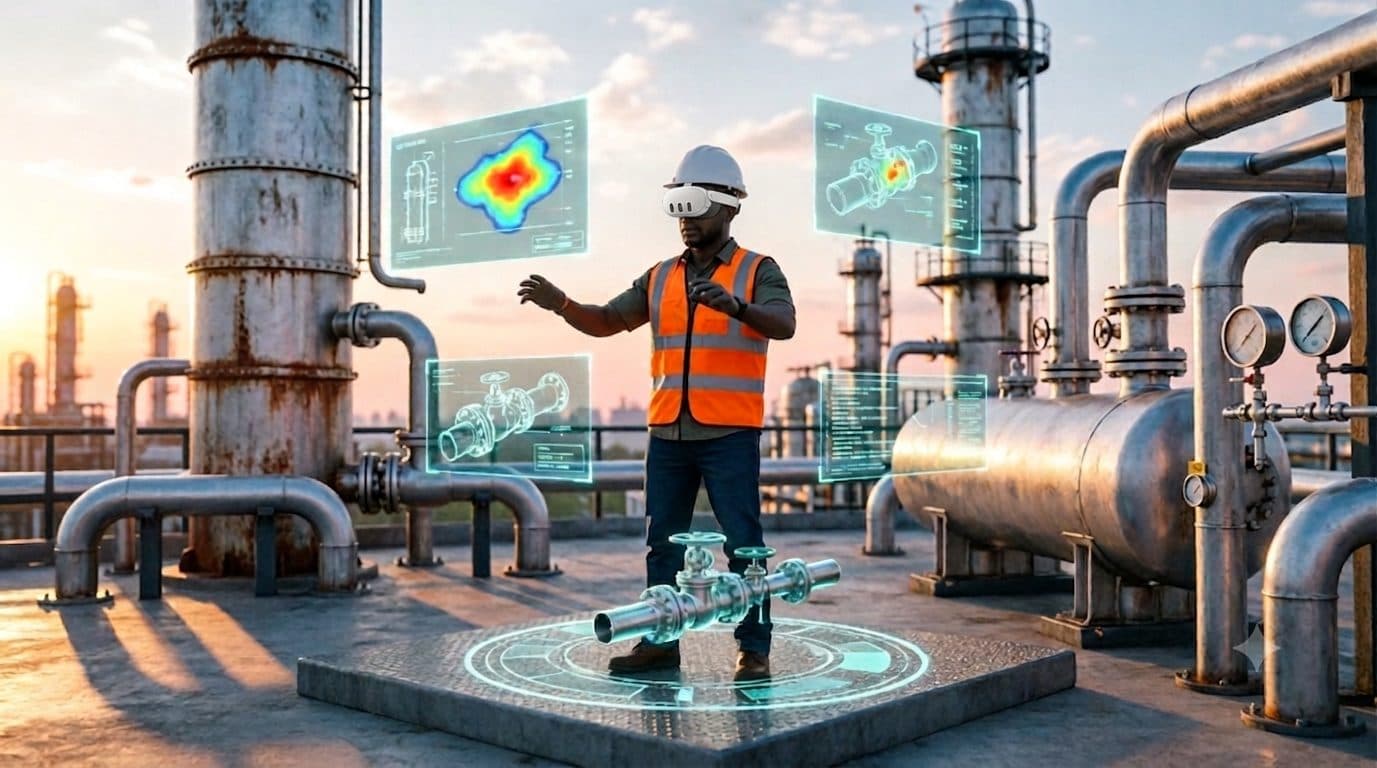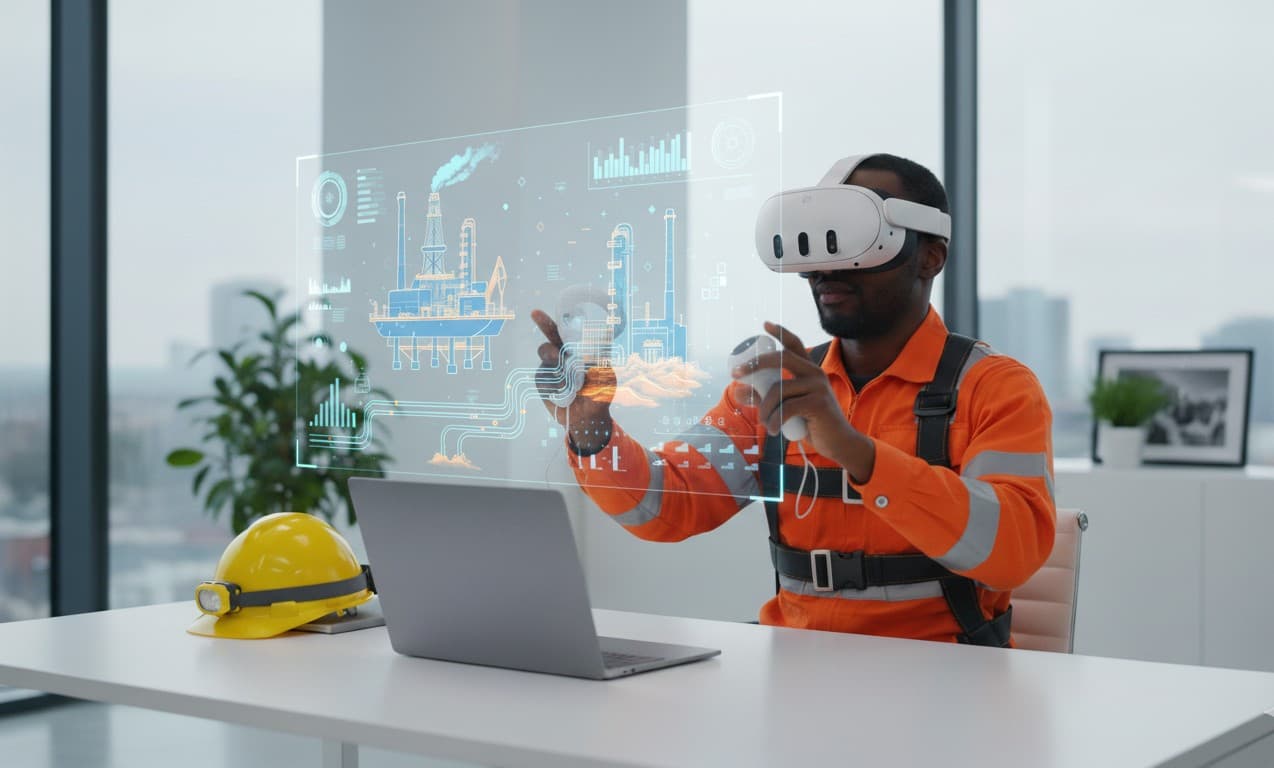
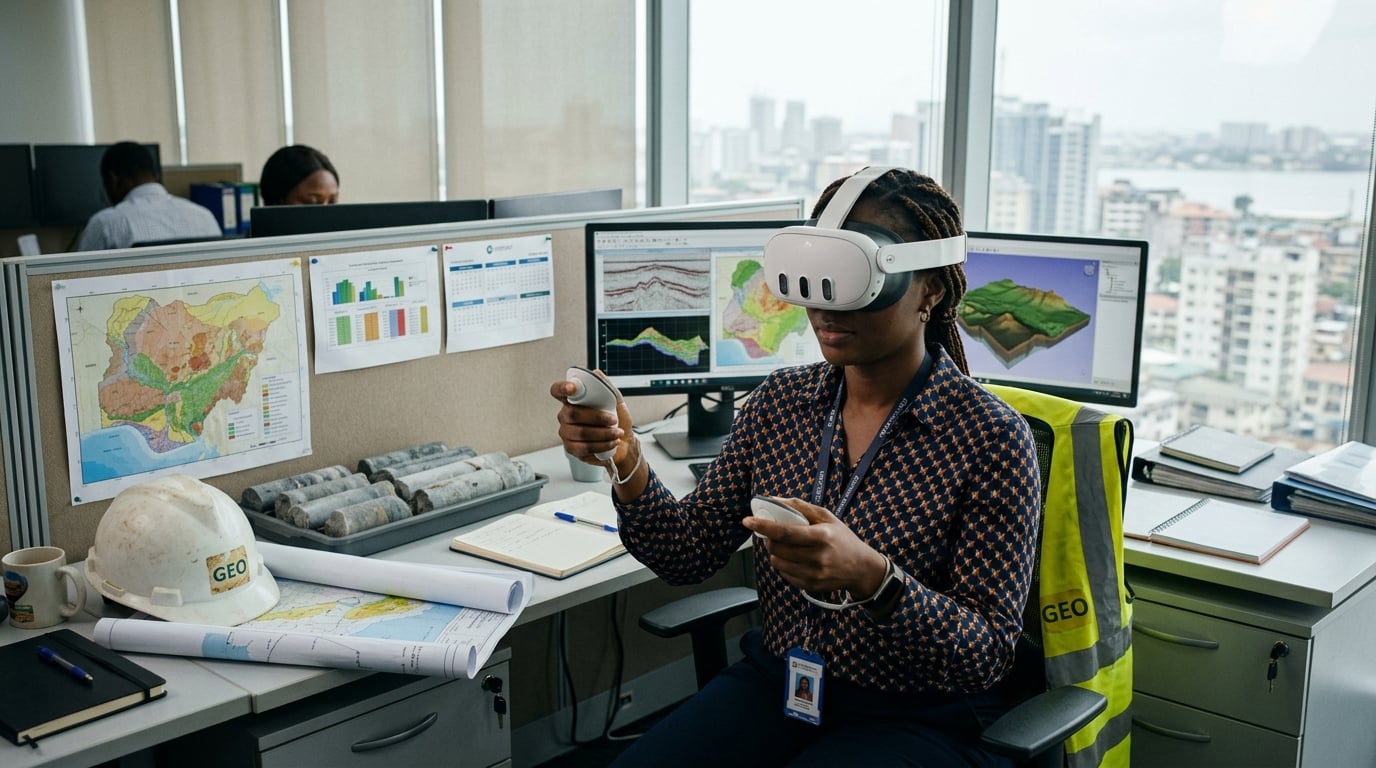
Virtual Reality (VR) is attracting growing interest among oil and gas companies seeking better ways to train personnel, improve safety preparedness and strengthen technical competency.
However, organisations considering immersive training often have practical questions about its applications, implementation requirements, costs and effectiveness.
Here are answers to ten common questions about VR training in Nigeria's oil and gas industry.
1. What Is Virtual Reality Training in the Oil and Gas Industry?
Virtual Reality training uses computer-generated environments to simulate selected industrial facilities, equipment and operational scenarios.
Workers typically participate using VR headsets that allow them to look around, explore virtual spaces and interact with simulated objects.
Oil and gas applications include safety training, hazard identification, equipment familiarisation, procedural rehearsal and emergency preparedness.
The purpose is to complement existing training programmes by introducing practical learning experiences that may otherwise be difficult to recreate.
2. How Can VR Improve Safety Training in Oil and Gas?
VR allows workers to practise identifying hazards and responding to simulated incidents without exposure to the corresponding physical risks.
For example, personnel can participate in simulations involving fire emergencies, gas leaks, confined spaces or evacuation procedures.
These exercises may help improve situational awareness, procedural familiarity and decision-making.
Organisations can also assess participant responses and identify areas requiring further training through structured HSE and emergency preparedness simulations.
3. Can VR Be Used for Confined Space Entry Training?
Yes. Confined space training is an important potential application of industrial VR.
An immersive simulation can recreate a confined space environment, illustrate relevant hazards and guide trainees through approved safety concepts and response decisions.
Training may address permit-to-work awareness, hazard recognition, communication arrangements and emergency procedures.
However, VR does not replace required practical assessments, authorised entry procedures or supervised physical training.
4. What Equipment Is Needed for Industrial VR Training?
The equipment depends on the type of training application.
Basic immersive training may use standalone VR headsets, which contain the processing hardware needed to run compatible applications.
More technically demanding simulations may require computer-connected headsets and suitable workstations.
Organisations may also need charging arrangements, designated training spaces, device management systems and instructor support.
The most appropriate setup depends on the training objectives, the complexity of the simulation and the intended deployment environment.
5. Does VR Training Require an Internet Connection?
Not always.
Some industrial VR applications can operate offline after the training content has been installed on the device.
This can be particularly useful for facilities with limited or unreliable connectivity.
However, systems involving centralised reporting, remote collaboration, cloud-hosted content or real-time information may require internet or local network access.
The deployment architecture should be selected according to the organisation's infrastructure and operational requirements.
6. How Much Does VR Training Cost in Nigeria?
The cost of developing a VR training programme varies significantly depending on the project scope.
Important factors include the complexity of the industrial environment, accuracy of the required 3D models, number of training scenarios, interactive features, assessment requirements, hardware and ongoing support.
A relatively simple guided virtual experience will generally have different development requirements from a highly interactive, site-specific equipment simulation.
For this reason, organisations should request quotations based on clearly defined training objectives rather than assume a fixed price per module.
7. Can VR Be Used to Train Maintenance Engineers and Technicians?
Yes. VR and interactive 3D environments can help technicians become familiar with equipment components, configurations and approved maintenance procedures.
Examples include compressor familiarisation, pump assembly visualisation, equipment inspection preparation and procedural sequencing.
Organisations can also use interactive digital procedures to make technical information more accessible within a visual equipment context.
These applications are particularly valuable for preliminary familiarisation and rehearsal before supervised work.
8. Can VR Training Be Integrated with a Learning Management System?
Yes. Depending on the architecture, VR training systems can be integrated with compatible Learning Management Systems (LMS).
This may allow organisations to record completion status, assessment scores and selected learning activities alongside other training information.
For oil and gas companies managing large workforces, such integration can support structured reporting and competency development.
However, the precise functionality depends on the capabilities of the VR application, the existing LMS and the agreed technical requirements.
9. Can VR Replace Traditional Industrial Training?
No. VR is most effective as part of a blended training approach.
Classroom instruction remains valuable for theoretical knowledge, while supervised physical training is essential for developing and verifying certain practical competencies.
VR complements these methods by allowing workers to visualise complex environments and rehearse selected procedures.
A well-designed programme combines the strengths of each training method rather than relying entirely on one technology.
10. How Can an Oil and Gas Company in Nigeria Get Started with VR Training?
The recommended starting point is to identify a specific training challenge that immersive technology may help address.
This could involve a hazardous procedure, an equipment familiarisation requirement or a recurring difficulty in preparing personnel for operational tasks.
The organisation can then develop a focused pilot with clearly defined learning objectives.
Technical experts should review the content, and training outcomes should be measured before expanding the programme.
Working with a provider experienced in industrial VR training can help organisations select appropriate technologies, develop accurate simulations and plan sustainable deployment.
Explore VR Training Opportunities for Your Organisation
Virtual Reality offers Nigerian oil and gas operators a practical way to strengthen workforce development, improve safety preparedness and make complex technical information easier to understand.
The most effective implementations begin with clear training objectives and build on measurable results.
For a more detailed examination of the opportunities and implementation considerations, explore Insightful3d Studio's white paper:
Download: Virtual Reality in Nigerian Oil & Gas Industry — White Paper (PDF)