A vessel is approaching port when visibility begins to drop. The crew must assess the situation, communicate clearly and decide how to proceed. Knowing the correct procedure is important, but being able to apply it under pressure is what matters.
This is one of the challenges maritime training must address. Seafarers, marine engineers and port personnel need more than theoretical knowledge. They must understand their equipment, recognise changing conditions and respond appropriately when something unexpected happens.
For Nigeria, where maritime activities support shipping, offshore operations and port logistics, the quality of practical training has implications for workforce readiness and operational safety.
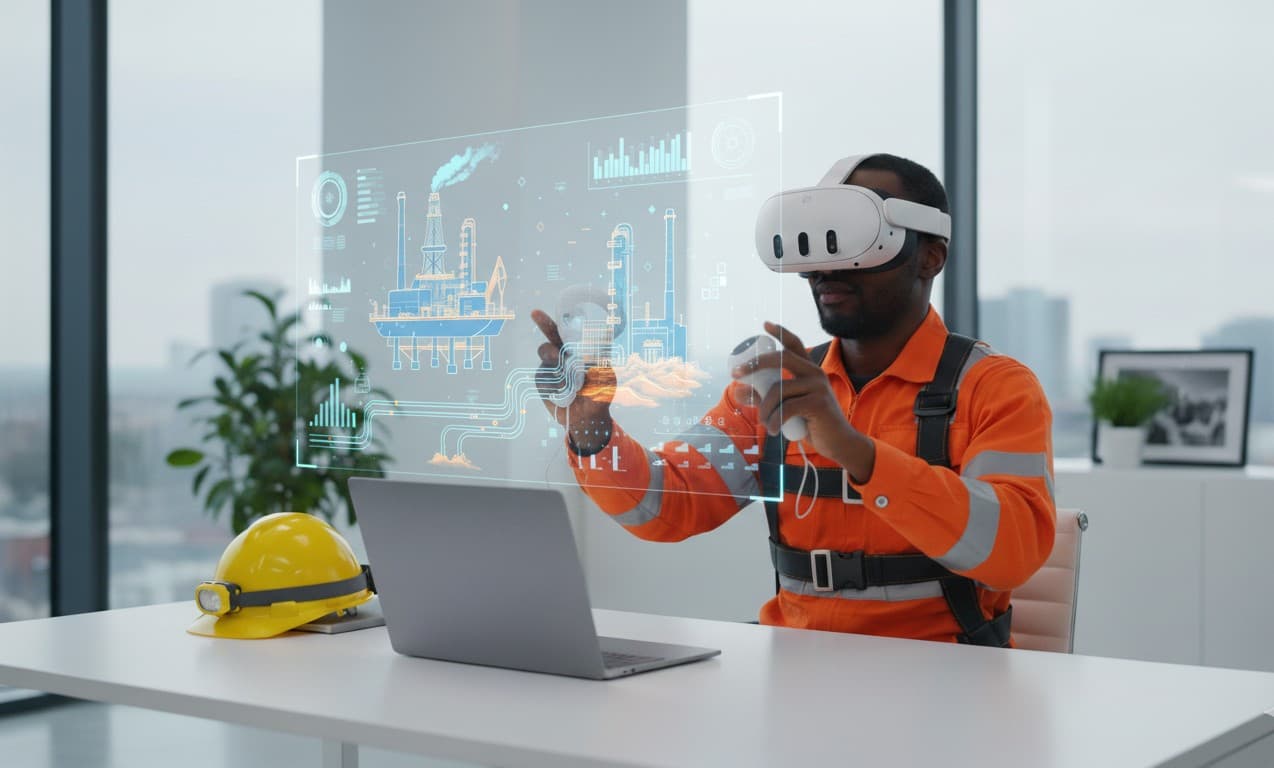
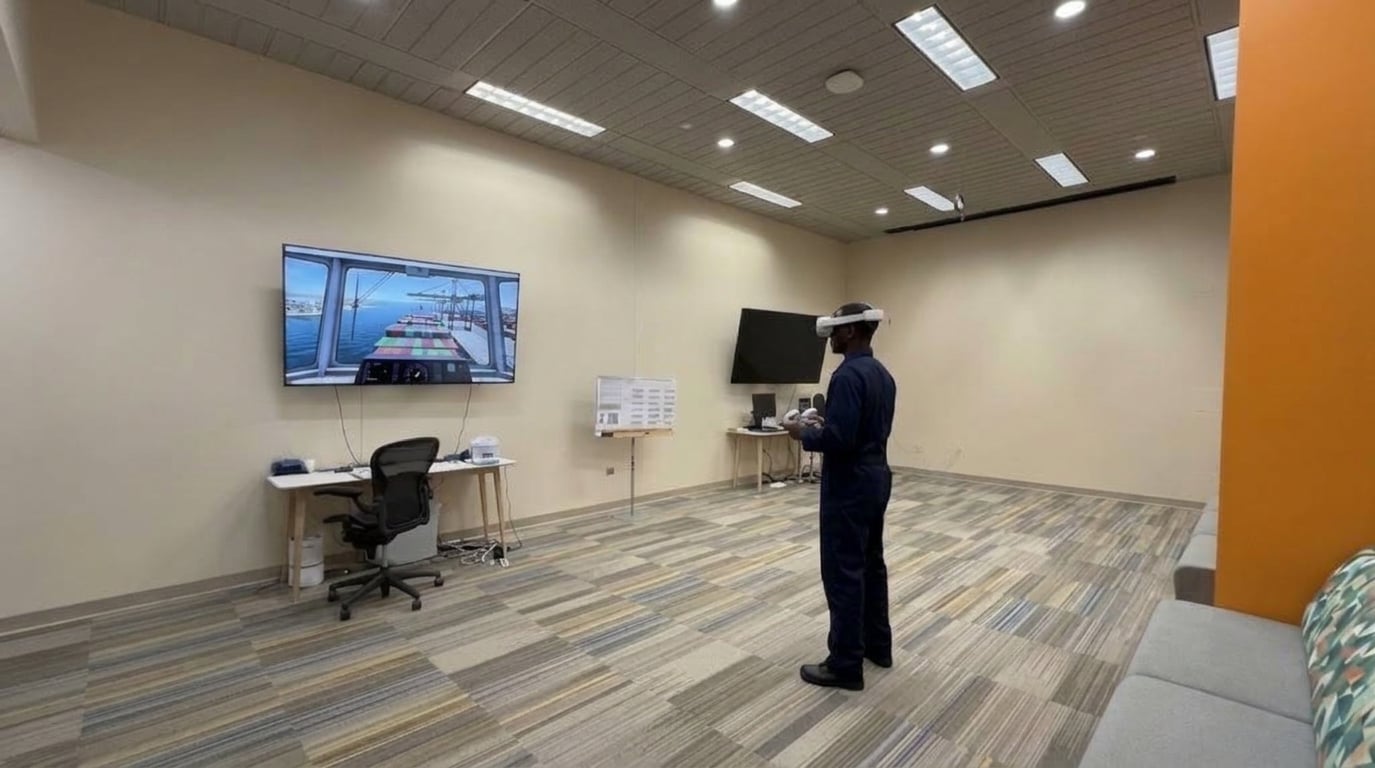
Virtual reality (VR) simulation offers another way to prepare people for these responsibilities. It allows trainees to enter interactive, computer-generated environments, practise selected tasks and experience realistic scenarios without being physically present in the operational setting.
The opportunity is not to replace established maritime training methods. It is to explore how immersive experiences can help bridge the gap between understanding a procedure and knowing how to apply it.
Maritime Training Must Prepare People for More Than Routine Operations
Many maritime tasks follow established procedures. A deck officer must understand navigation equipment. An engineer needs to recognise machinery components and follow maintenance procedures. Port personnel must understand the hazards and operational requirements associated with their work.
However, real operations rarely follow a perfect script.
Weather conditions can change. Equipment may behave unexpectedly. Communication between team members can break down. An emergency may require several people to make decisions within a limited time.
Classroom instruction helps trainees understand the principles behind these situations. Practical exercises and conventional simulators allow them to develop and demonstrate relevant skills. However, there may also be opportunities to provide additional interactive practice before trainees enter more advanced exercises or real operational environments.
This is where VR can contribute.
Instead of simply watching an instructor explain an equipment procedure, a trainee could explore a virtual environment, identify relevant components, operate selected controls and respond to instructions. If the trainee makes a mistake, the experience can provide feedback and allow another attempt.
The emphasis shifts from remembering what to do towards practising how to do it.
Where VR Can Make a Difference in Maritime Training
The value of VR depends on the task, the trainee's experience and the learning objectives. It is most useful when an immersive experience provides a clear training benefit.
1. Familiarising Trainees with Shipboard Environments
For someone preparing to work aboard a vessel, understanding the layout of the environment is an important starting point.
A VR experience could introduce trainees to selected areas of a ship, such as the bridge, engine room or designated safety equipment locations. They could explore the space, identify important equipment and learn how different areas relate to their responsibilities.
For example, a new trainee might be guided through a virtual engine room to identify major components and understand where routine inspections take place.
This kind of familiarisation could help trainees arrive at practical sessions with a clearer understanding of the environment.
It may also be useful for organisations introducing personnel to vessel types or layouts they have not encountered before.
2. Practising Emergency Responses
Emergencies require people to recognise warning signs, follow procedures and make decisions under pressure.
VR can recreate selected emergency scenarios, allowing trainees to practise their responses in a controlled environment. Depending on the training objectives, these might include identifying a fire hazard, locating emergency equipment, responding to an alarm or following an evacuation procedure.
The trainee would not simply watch a demonstration. They would need to make decisions and complete relevant actions within the experience.
The simulation could then provide feedback on missed steps or incorrect responses.
This creates opportunities to repeat scenarios and reinforce the correct sequence of actions. It also gives instructors a basis for discussing why a particular response was appropriate.
VR emergency scenarios should be developed around approved procedures and used alongside the practical drills, equipment training and assessments required for the role.
3. Understanding Port and Vessel Safety
Maritime safety involves recognising hazards before they lead to incidents.
A virtual environment could present trainees with situations involving obstructed access routes, unsafe working practices, incorrect use of personal protective equipment or hazards around vessel and port operations.
Trainees could be asked to inspect the environment, identify the risks and select the appropriate corrective action.
For port personnel, a scenario might focus on recognising hazards within a designated working area. For shipboard personnel, it could introduce specific safety checks relevant to their duties.
These experiences can make safety instruction more interactive by asking trainees to apply what they know rather than relying entirely on written material or verbal explanations.
The scenarios should reflect the actual working environment and the procedures trainees are expected to follow.
4. Introducing Equipment and Operating Procedures
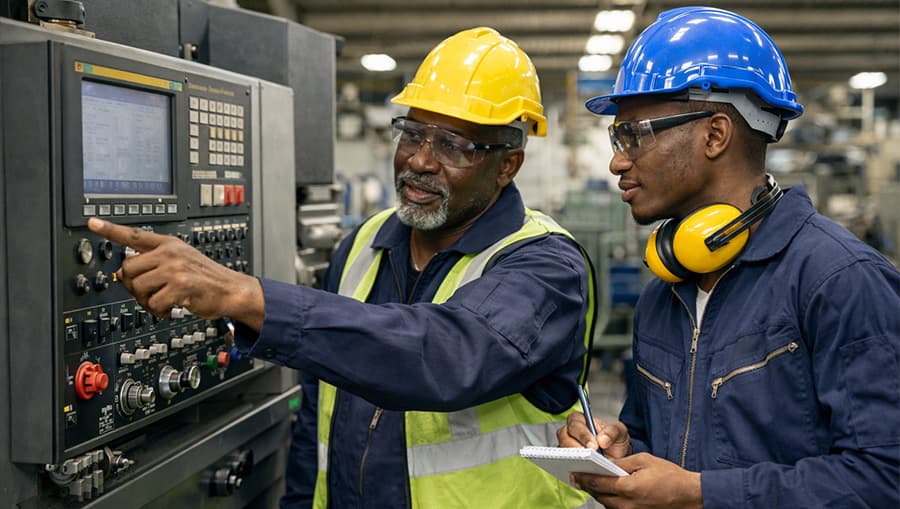
Maritime professionals work with specialised equipment, and understanding its purpose and operation is essential.
A VR simulation could introduce selected equipment controls, components and operating sequences. Trainees might practise identifying parts, following a checklist or completing a sequence of actions in the correct order.
For example, an experience could guide a trainee through the initial familiarisation of a piece of marine equipment before supervised practice with the actual system.
For maintenance training, a simulation might introduce the location of selected components or guide trainees through a troubleshooting sequence.
The aim is to establish familiarity and reinforce procedural knowledge before the trainee progresses to practical work.
Where a task depends on physical feedback, the handling of real tools or the precise operation of specialist equipment, physical training remains necessary.
5. Preparing Offshore and Marine Personnel for Unfamiliar Situations
Offshore and marine operations can involve environments and procedures that personnel do not encounter every day.
A VR experience could introduce workers to selected work areas, operational sequences and potential hazards before they enter the actual environment.
For instance, personnel preparing for offshore work could explore a virtual environment to become familiar with access routes, designated equipment locations or relevant safety procedures.
An organisation could also use scenario-based experiences to introduce changes in working conditions or reinforce specific emergency responses.
The exact application would depend on the operation, the experience of the workforce and the procedures that need to be practised.
For organisations with geographically dispersed teams, suitable VR experiences could also provide a consistent introduction to selected procedures, subject to the capabilities of the chosen hardware and software.
VR Is an Opportunity to Complement Existing Maritime Simulators
Nigeria is not starting from scratch with simulation-based maritime training.
The Maritime Academy of Nigeria describes the use of full-mission bridge simulators and engine room simulators to train cadets and other maritime personnel. Its simulator-based courses also cover areas such as ship manoeuvring, bridge teamwork, radar navigation and engine room operations.
These examples demonstrate that simulation already has a place in maritime training.
The more useful question is where VR could add value alongside existing facilities and programmes.
A full-mission simulator may be the appropriate environment for practising complex navigation, bridge teamwork or engine room operations. A VR experience may be better suited to introducing trainees to a physical environment, reinforcing selected procedures or allowing them to repeat a focused scenario.
The two approaches can serve different purposes.
Before investing in a new experience, a training institution or maritime operator should identify the specific learning gap it wants to address. It should then determine whether VR, an existing simulator, conventional practical training or a combination of these methods is the most appropriate solution.
The Maritime Academy of Nigeria's practical training facilities provide an example of the established simulator-based training already taking place in the country.
What Maritime Organisations Should Consider Before Adopting VR
VR is not automatically the right solution for every maritime training requirement. Its value depends on how well the experience reflects the task and how effectively it supports the intended learning outcome.
Before commissioning a VR training experience, organisations should consider five important questions.
What skill needs to improve?
Start with a clearly defined training need. This could be equipment familiarisation, hazard recognition, emergency procedure practice or understanding a particular working environment.
Who will use the experience?
Cadets, experienced seafarers, marine engineers and port personnel have different responsibilities. The content should reflect the trainee's role and level of experience.
How will the experience be assessed?
Decide what successful performance looks like. Trainees might need to identify the correct equipment, complete a sequence of actions, recognise hazards or select an appropriate response to a scenario.
How will VR fit into existing training?
Determine whether the experience will prepare trainees for practical sessions, reinforce classroom instruction or support a specific part of an established training programme.
What technical and regulatory requirements apply?
The organisation should assess its hardware, software, training facilities and maintenance requirements. It must also establish whether the proposed experience is suitable for its intended use within the applicable training and assessment framework.
For regulated maritime training, VR should not be assumed to replace mandatory simulator exercises, practical assessments or certification requirements. The organisation should confirm the applicable requirements with the relevant authorities.
The Nigerian Maritime Administration and Safety Agency (NIMASA) provides information on approved maritime training institutions and the applicable training framework.
From Training Idea to a Practical VR Experience
For organisations considering VR, the first step does not have to be a large-scale training programme.
A more practical approach is to identify one area where an interactive experience could address a genuine training challenge.
A maritime training institution might begin with shipboard familiarisation. An offshore operator might consider a specific safety scenario. A port operator could explore an interactive experience for hazard recognition or procedural training.
The next step is to define the learning objectives, identify the required interactions and determine how trainees will receive feedback.
A small pilot can then help establish whether the experience is useful, whether trainees can complete the intended tasks and whether instructors can evaluate the results. Findings from the pilot can inform decisions about further development.
At Insightful3D, we develop immersive VR experiences and interactive simulations for training and operational use. Our industrial training solutions can help organisations explore how virtual environments could support workforce familiarisation, procedural learning and scenario-based training.
The appropriate solution will depend on the organisation's objectives, operating environment and existing training arrangements.
Explore VR Training for Your Maritime Organisation
Nigeria's maritime sector needs personnel who can apply their knowledge, follow procedures and respond appropriately to the demands of their roles.
VR simulation offers an additional way to prepare people for selected tasks by allowing them to explore environments, practise decisions and receive feedback before progressing to practical training.
The most effective starting point is not to adopt VR simply because the technology is available. It is to identify a training challenge and determine whether an immersive experience can help address it.
Is your organisation exploring VR for maritime, marine engineering, port operations or offshore workforce training?
Contact Insightful3D to discuss your training objectives and explore the possibilities for a tailored VR simulation. We can help you assess the use case, define the experience and identify a practical starting point for your project.