Nigeria's manufacturing industry continues to face challenges that affect productivity, operational efficiency and competitiveness. Unreliable power supply, equipment downtime, skills gaps, rising operating costs and process inconsistencies remain important concerns for manufacturers looking to improve their operations.
Addressing these challenges requires more than investment in machinery and infrastructure. It also calls for better approaches to workforce development, operational processes and the use of technology.
One area attracting growing attention is Extended Reality (XR).
Combining Virtual Reality (VR), Augmented Reality (AR) and Mixed Reality (MR), XR offers new ways for manufacturers to train employees, improve safety preparation, access technical information and interact with complex equipment and environments.
But what does this mean for Nigerian manufacturers? Where can these technologies deliver practical value, and what should organisations consider before adopting them?
These are some of the questions explored in Insightful3D's new white paper:
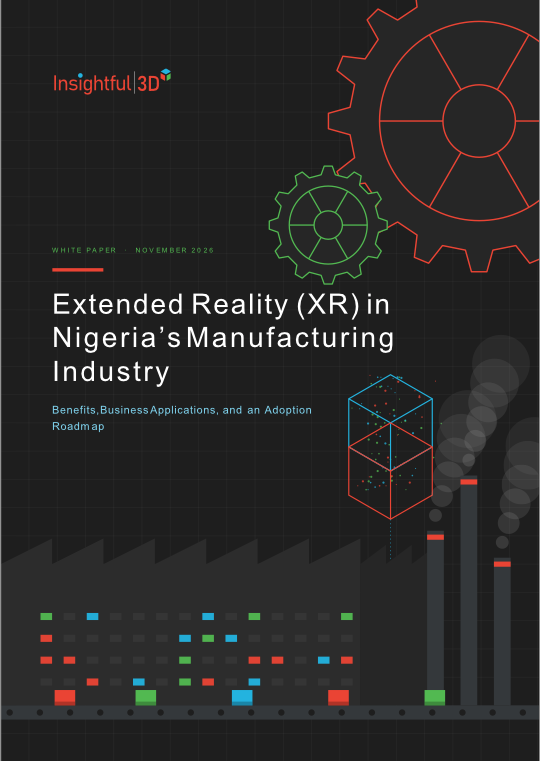
Extended Reality (XR) in Nigeria's Manufacturing Industry: Benefits, Business Applications, and an Adoption Roadmap.
The publication examines the opportunities for XR within Nigeria's manufacturing sector, drawing on global industry experience, relevant research and local operating realities to provide practical guidance for organisations evaluating the technology.
Key Takeaways
- Addressing Manufacturing Challenges: XR offers new approaches to tackling workforce skills gaps, equipment downtime, safety risks and operational inefficiencies.
- Beyond Workforce Training: VR, AR and MR have practical applications across six key manufacturing areas, including HSE, maintenance, production, quality assurance and engineering.
- Measuring Business Value: Successful XR adoption requires clear objectives, relevant performance indicators and an understanding of potential return on investment (ROI).
- A Structured Approach to Adoption: Manufacturers should assess their readiness, identify suitable use cases and begin with targeted pilot projects before scaling implementation.
- Understanding Local Realities: Infrastructure, hardware costs, workforce readiness and integration requirements must inform XR adoption decisions within Nigeria's manufacturing environment.
Why Is XR Relevant to Nigeria's Manufacturing Industry?
Manufacturing operations depend on people, equipment and processes working together efficiently. However, challenges such as limited access to practical training, equipment downtime, workplace safety risks and inconsistent procedures can affect operational performance.
XR offers another way to address some of these challenges.
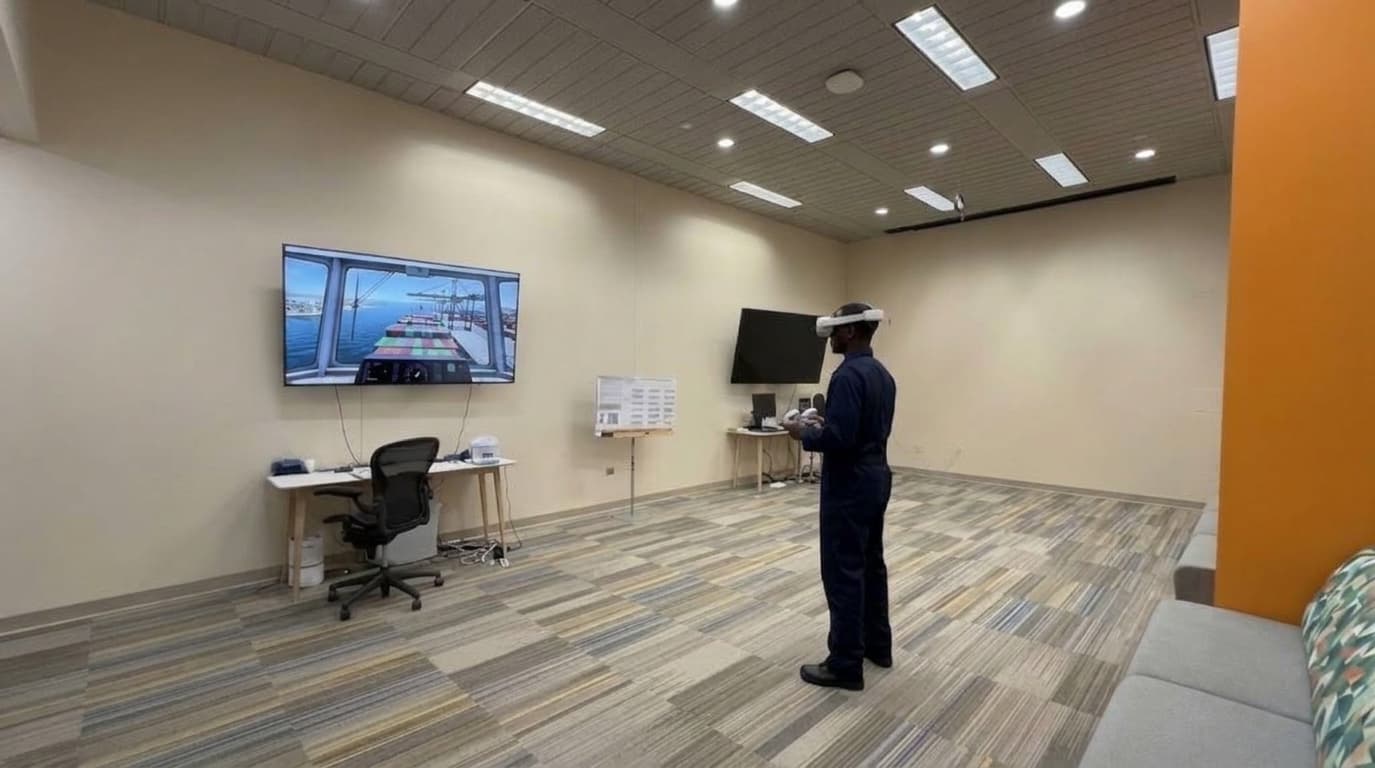
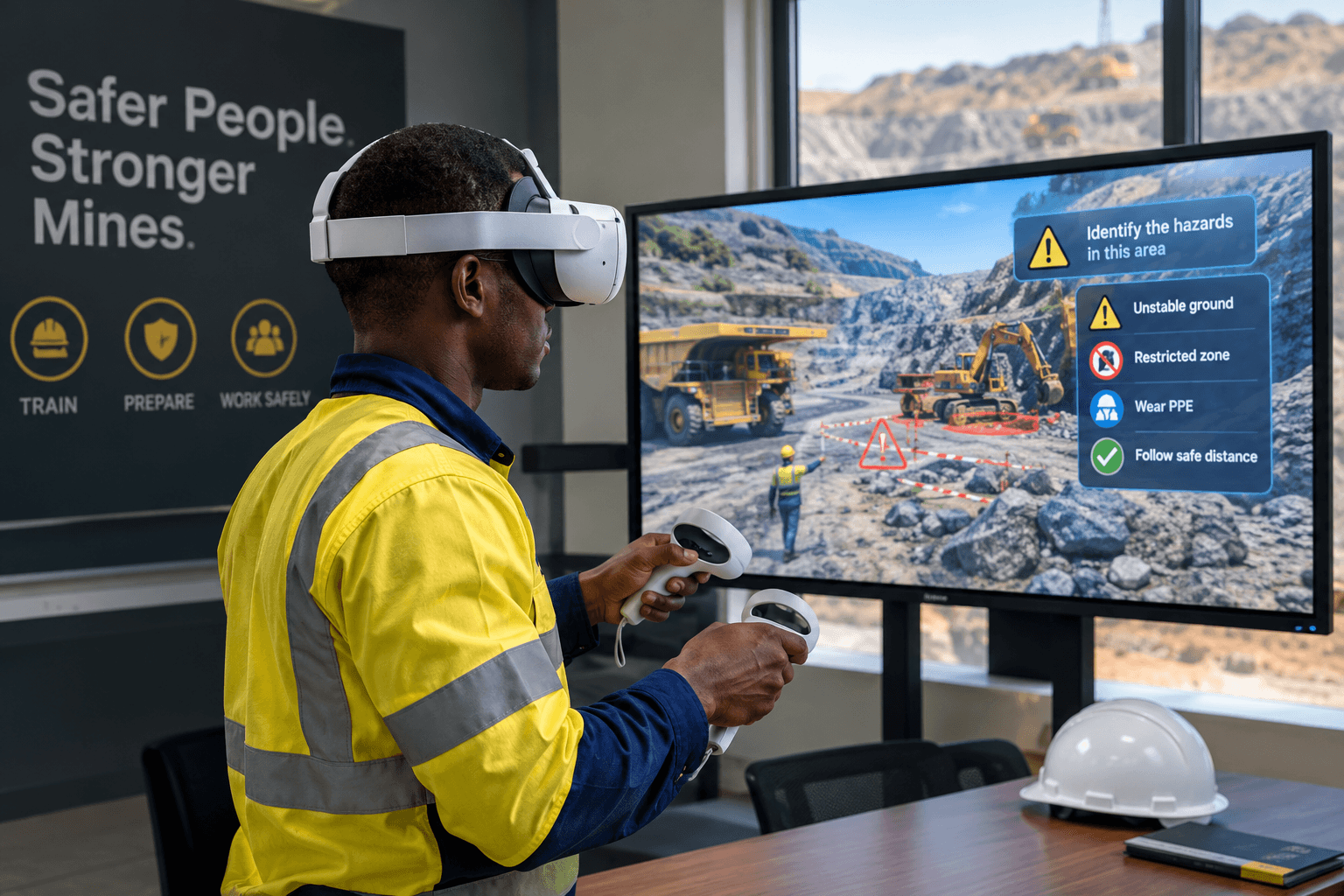
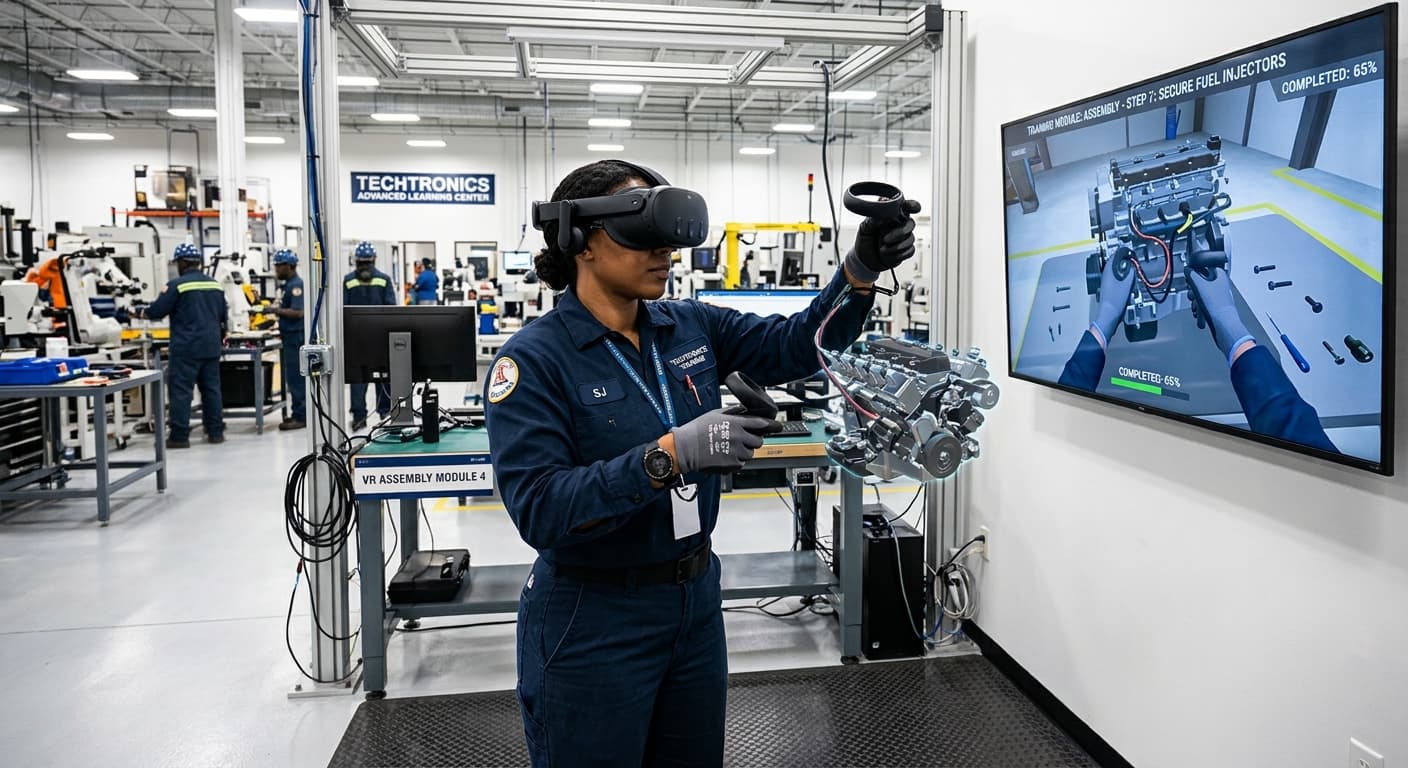
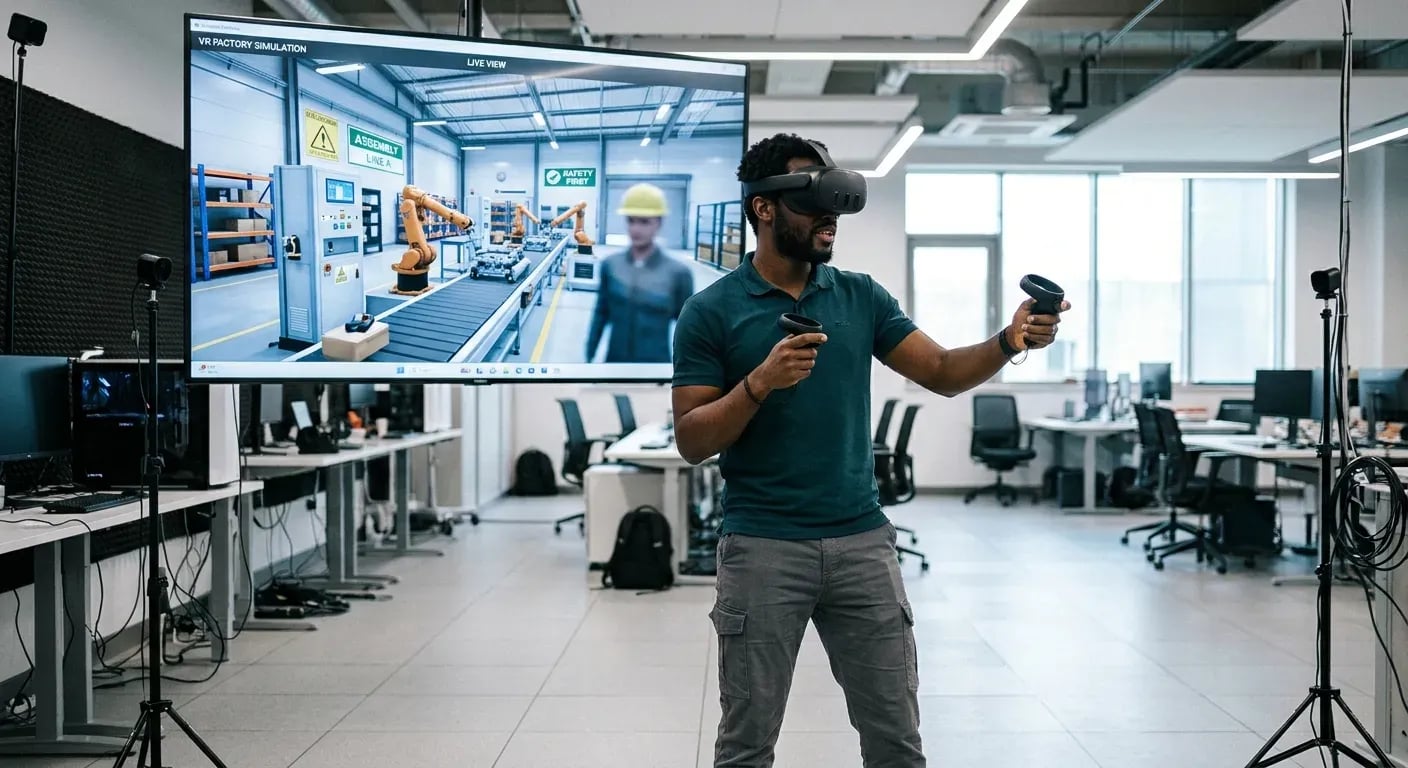
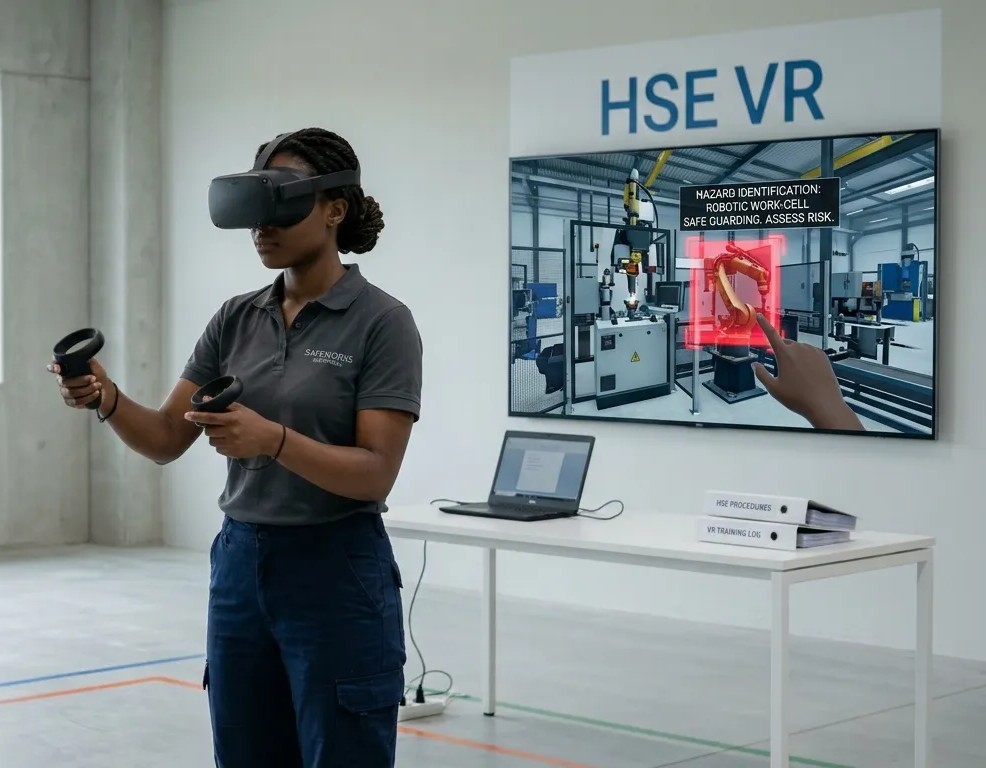
For example, Virtual Reality can create simulated environments where employees practise procedures and become familiar with equipment before working in actual facilities. Augmented Reality can provide digital instructions and visual guidance during selected maintenance activities, while Mixed Reality can help teams interact with digital representations of physical equipment.
These applications extend beyond training. They create opportunities to improve how technical knowledge is communicated, how workers prepare for operational tasks and how engineering teams understand complex environments.
For manufacturers, the important consideration is not simply what the technology can do, but where it can make a meaningful difference.
What Does the White Paper Explore?
The white paper takes a broader look at XR and its potential applications across Nigeria's manufacturing industry.
It is structured around several important areas:
1. Understanding the Manufacturing Landscape
The publication examines the state of Nigeria's manufacturing sector, highlighting some of the operational and structural challenges affecting productivity, capacity utilisation and competitiveness.
It provides the context for understanding why manufacturers may need to explore new approaches to improving their operations.
2. Understanding Extended Reality and Its Business Value
What distinguishes VR, AR and MR, and how can these technologies support manufacturing activities?
The white paper explains the different components of XR, why the technologies are gaining attention and the potential business benefits they offer.
3. Practical Applications Across Manufacturing Operations
Beyond immersive training, the publication explores how XR can be applied across six key areas:
- Workforce training and skills development.
- Health, Safety and Environment (HSE).
- Operations and production.
- Maintenance and engineering.
- Quality assurance.
- Design, engineering and digital twins.
Each application presents different opportunities for manufacturers seeking to improve workforce competence, operational processes and access to technical information.
4. Evaluating the Business Case
Adopting new technology requires more than identifying its potential applications. Organisations must understand the resources involved and determine whether the investment can deliver measurable value.
The publication explores how manufacturers can evaluate XR opportunities, establish relevant performance indicators and assess return on investment (ROI).
5. A Practical Roadmap for Adoption
One of the central themes of the white paper is that successful XR adoption requires a structured approach.
Rather than investing in technology without a clear objective, manufacturers need to assess their readiness, identify suitable applications, establish business priorities and begin with carefully selected pilot projects.
The publication presents a seven-step adoption framework to guide organisations through this process, alongside common implementation challenges and recommendations for addressing them.
What Should Nigerian Manufacturers Consider Before Adopting XR?
Although XR offers opportunities across manufacturing operations, successful implementation depends on more than the technology itself.
Manufacturers must consider infrastructure requirements, hardware costs, workforce readiness, content development, integration with existing systems and the long-term maintenance of digital experiences.
These considerations are particularly relevant within the Nigerian operating environment.
The white paper explores these challenges and explains why manufacturers should approach adoption based on their actual business requirements rather than technology trends alone.
It also examines emerging developments in artificial intelligence, spatial computing, wearable devices and industrial digital twins, highlighting how these technologies could influence the future of manufacturing.
Explore the Full White Paper
Extended Reality is creating new possibilities for how manufacturers train their workforce, manage operational knowledge and interact with complex industrial environments.
However, understanding where the technology fits, what it requires and how its value can be measured is essential before considering implementation.
Insightful3D's white paper, Extended Reality (XR) in Nigeria's Manufacturing Industry: Benefits, Business Applications, and an Adoption Roadmap, brings these considerations together in one publication.
Explore the research, examine the business applications and discover the practical steps Nigerian manufacturers can take when evaluating XR adoption.
At Insightful3D, we develop immersive technologies that help organisations improve how people learn, understand and interact with complex environments.